
Clindamycin & Benzoyl Peroxide Gel

Acne Treatment

  • In stock
  • Including FREE discreet Delivery
Select Dosage
Select Quantity
Price:

Price preview only. You can choose monthly subscription or one-time order at checkout.

About

What is Clindamycin-benzoyl perox gel?

Clindamycin-benzoyl peroxide gel is a prescription topical medication used to treat acne vulgaris. It combines clindamycin (an antibiotic) with benzoyl peroxide (which helps reduce acne-causing bacteria and unclog pores) in one formulation and is applied directly to the skin.

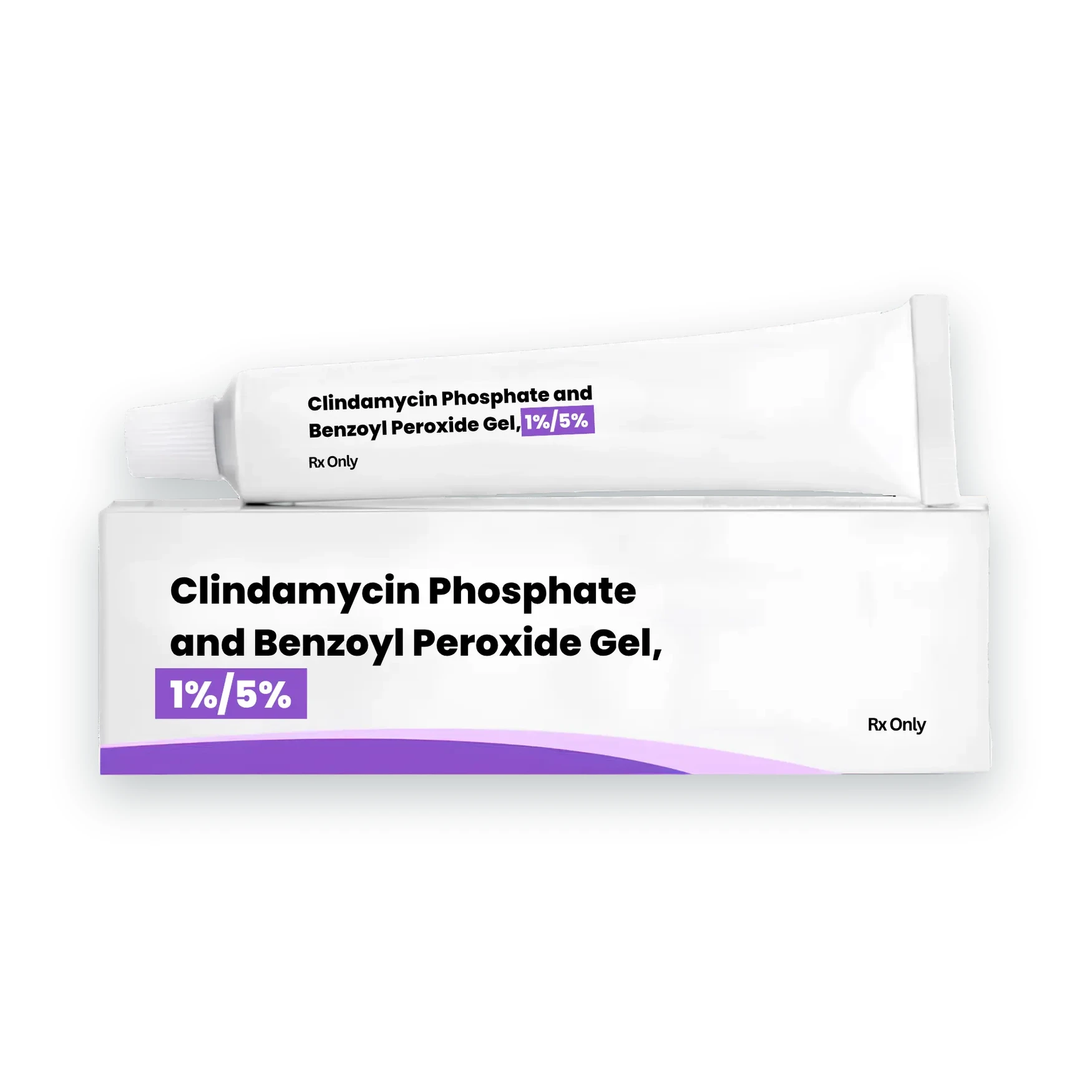
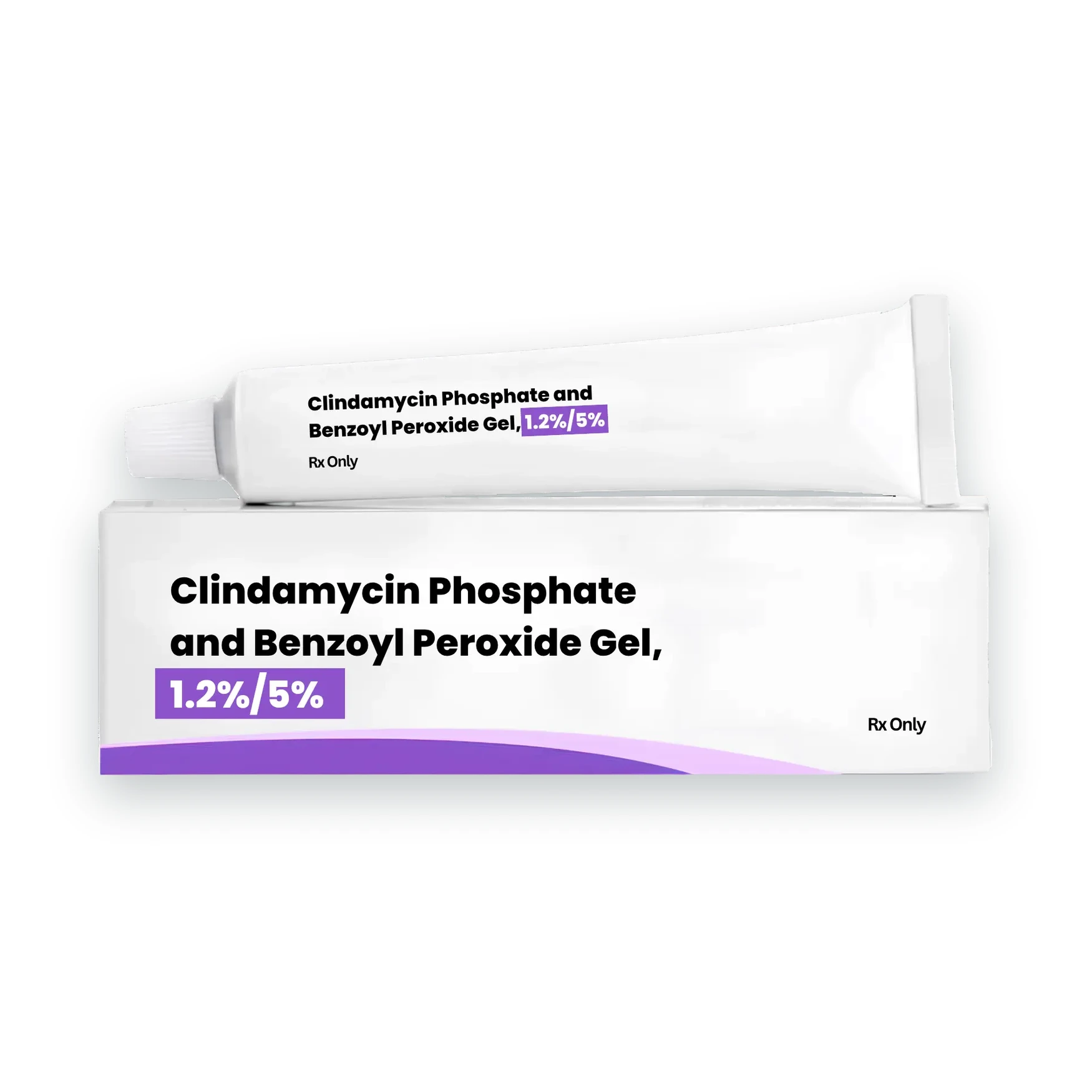
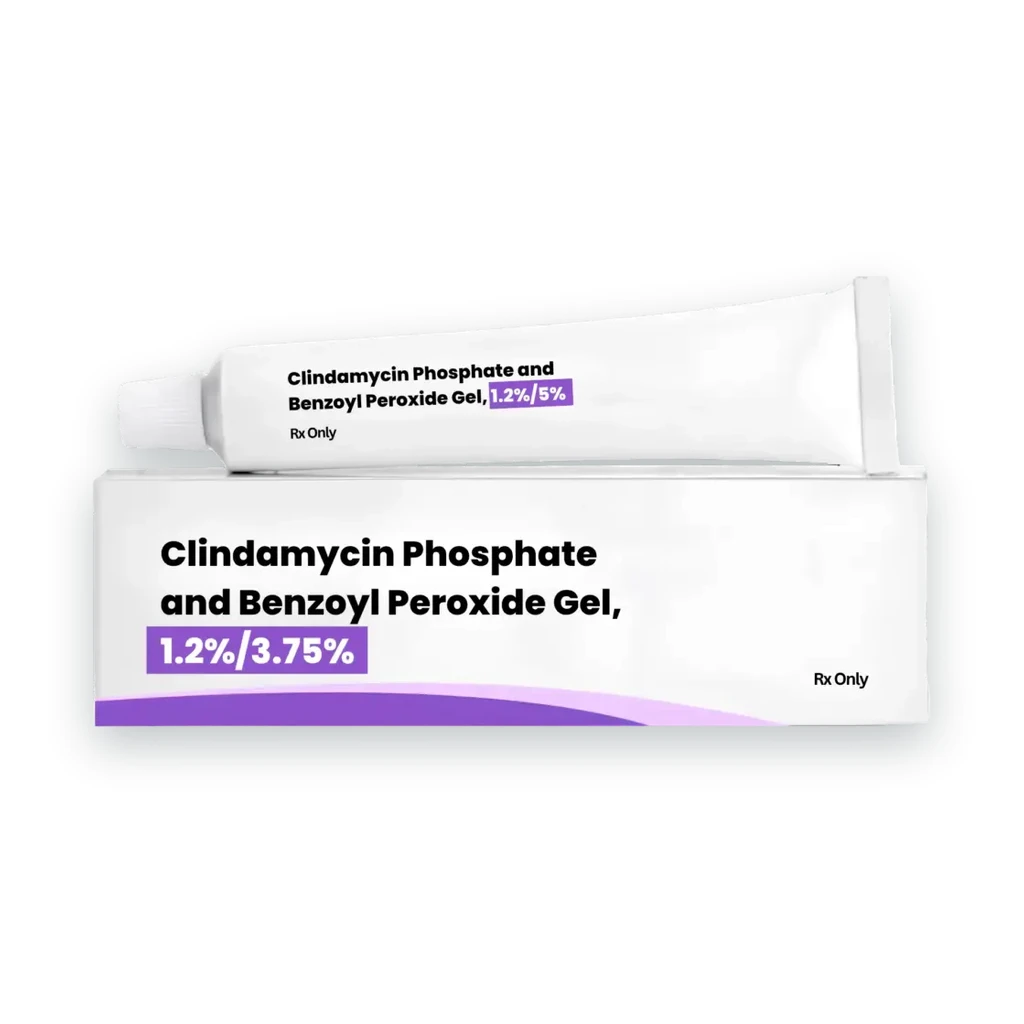
This treatment is available in different strengths, including 1%/5%, 1.2%/5% and 1.2%/3.75%. The difference lies in the concentration of the active ingredients, which affects how strongly the treatment works. Higher concentrations provide a more intensive treatment, while lower concentrations offer a milder approach.

A licensed healthcare provider will determine the most appropriate formulation and strength based on your individual skin type, medical history, and the severity of your condition.

  • Used for the topical treatment of acne vulgaris
  • Contains clindamycin and benzoyl peroxide
  • Applied to the skin (not taken orally)
  • Intended for regular use as prescribed
  • Strength and treatment plan are determined by a healthcare provider

How do I take Clindamycin-benzoyl perox gel?

Clindamycin-benzoyl perox gel is used on the skin, usually twice daily in the morning and evening, or as directed by your physician. Before applying it, the skin should be gently washed, rinsed with warm water, and patted dry.

This medicine is for dermatologic use only and should not be used in the eyes or on internal surfaces. Using it consistently and only as directed can help support treatment while lowering the chance of unnecessary irritation.

  • Apply twice daily, morning and evening, unless your provider tells you otherwise
  • Wash, rinse, and pat the skin dry before use
  • Use on the affected skin areas only
  • Keep it away from the eyes, inside the nose, mouth, and mucous membranes
  • Do not use other topical acne products unless your provider directs you to

What are the possible side effects?

The most common side effects with Clindamycin-benzoyl perox gel are skin-related and happen where the medicine is applied. These can include dryness, itching, peeling, redness, sunburn, or other application-site reactions.

Although this is a topical product, there are also important safety concerns to know about. Stop using the gel and contact your provider right away if you develop severe diarrhea, bloody diarrhea, or strong stomach cramps. Seek urgent medical help if you have signs of a serious allergic reaction, such as swelling, trouble breathing, or other severe symptoms.

  • Common reactions include dry skin, itching, peeling, and redness
  • Some people may have an application-site reaction or increased sun sensitivity
  • Skin irritation should be monitored, especially if it becomes harder to tolerate
  • Severe diarrhea or abdominal cramping should be reported right away
  • Serious allergic reactions need immediate medical attention

See Important Safety/Prescribing Information.

*Prescription products require an online consultation with a licensed healthcare provider who will determine if treatment is appropriate. Individual results may vary.

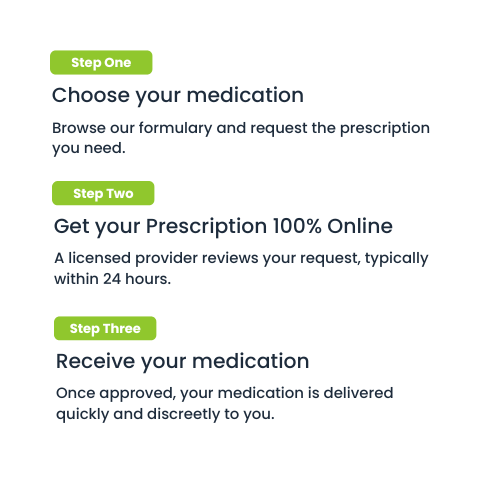
How it works

A few simple steps to your medication

1
Online Check
2
Medical Review
3
Fast Delivery

Healthcare. Made simple.

Convenient healthcare, without unnecessary waiting.

Order now

If not eligible: 100% money-back guarantee.

Licensed healthcare providers
24/7 access to care
One-time or subscription, cancel anytime

Topics

  1. 1. Who is Clindamycin-benzoyl perox gel for?
  2. 2. How is Clindamycin-benzoyl perox gel usually used?
  3. 3. What should I expect from treatment, and what should I not expect?
  4. 4. When should I stop using this gel and contact a provider right away?
  5. 5. What should I avoid while using this gel?
  6. 6. What medicines or skin products can interact with this gel?
  7. 7. What practical steps can help me use this gel more safely day to day?
  8. 8. How should I store Clindamycin-benzoyl perox gel?

Who is Clindamycin-benzoyl perox gel for?

This prescription gel is used for the treatment of acne vulgaris and is typically recommended when a provider determines that a combination topical therapy is appropriate. Because it contains both clindamycin and benzoyl peroxide, a clinical review helps confirm that this approach fits your skin condition and medical history.

  • Used for acne vulgaris diagnosed by a provider
  • Intended for topical use on the skin only
  • Prescribed as part of a structured acne treatment plan
  • May not be appropriate for people with certain medical histories or sensitivities
  • Requires provider evaluation before starting

If you have a history of certain gastrointestinal conditions or prior reactions to similar products, your provider may recommend a different option.

How is Clindamycin-benzoyl perox gel usually used?

This gel is generally applied twice daily, in the morning and evening, after gently cleansing the skin. Consistent use as directed is important, and applying more than recommended can increase the risk of irritation without improving outcomes.

  • Apply after washing and drying the skin
  • Use twice daily, unless directed otherwise
  • Apply only to affected areas
  • Keep it away from eyes, mouth, and mucous membranes
  • Avoid using additional acne products unless advised

If you are unsure how to integrate this into your routine, your provider can help adjust your regimen to reduce irritation.

What should I expect from treatment, and what should I not expect?

This gel is designed to treat acne as part of a consistent routine. It is not intended as a one-time or spot treatment, and results can vary depending on your skin and how you use it.

  • Use it as a regular part of your skincare routine
  • Do not expect instant or guaranteed results
  • Avoid applying more than directed to “speed up” results
  • Stay in touch with your provider if your skin response is unclear
  • Follow instructions carefully to help balance benefit and irritation

If your acne does not improve or your skin becomes difficult to manage, your provider may adjust your treatment plan.

When should I stop using this gel and contact a provider right away?

Certain symptoms require prompt attention. Although this is a topical treatment, the PI warns about serious gastrointestinal effects and allergic reactions that should not be ignored.

  • Stop use if you develop severe diarrhea or bloody diarrhea
  • Seek help for strong abdominal cramping
  • Get urgent care for signs of a serious allergic reaction
  • Contact your provider if irritation becomes severe or worsening
  • Do not restart without medical guidance

What should I avoid while using this gel?

There are several things to avoid during treatment to reduce the risk of irritation or unwanted reactions. The PI highlights sunlight exposure and certain product combinations as key concerns.

  • Avoid tanning beds and prolonged sun exposure
  • Use sunscreen and protective clothing when outdoors
  • Avoid contact with eyes, nose, mouth, and mucous membranes
  • Do not use other acne treatments unless directed
  • Be cautious with environmental factors like wind or sun exposure

What medicines or skin products can interact with this gel?

Some products can increase irritation or reduce effectiveness when used together. The PI specifically warns about combining certain topical treatments.

  • Avoid products containing erythromycin
  • Be cautious with other topical acne medications
  • Peeling or abrasive products may increase irritation
  • Harsh cleansers or strong exfoliants may worsen skin reactions
  • Discuss your full skincare routine with your provider

What practical steps can help me use this gel more safely day to day?

A few simple habits can make a big difference in how your skin responds to treatment. These steps focus on reducing irritation and supporting consistent use.

  • Use a gentle cleanser before applying
  • Apply only the recommended amount
  • Let the gel dry before contact with clothing or bedding
  • Protect your skin from sun exposure
  • Report any unusual reactions to your provider

How should I store Clindamycin-benzoyl perox gel?

This medication has specific storage instructions, especially after it has been prepared or dispensed. Following these instructions helps maintain its stability and effectiveness.

  • Store at room temperature (up to 25°C / 77°F)
  • Do not freeze the product
  • Keep the container tightly closed
  • Discard any unused gel after 3 months
  • Follow the label

Important safety information

FAQ

Can I use Clindamycin-benzoyl perox gel with other acne products?

You should be careful when combining this gel with other acne treatments. Using multiple products at the same time can increase skin irritation, especially if they contain strong or drying ingredients.

  • Avoid combining without provider guidance
  • Some products may increase dryness, redness, or peeling
  • Do not add new treatments all at once
  • Ask your provider how to safely build your routine

If your skin becomes more irritated after adding another product, stop the additional treatment and consult your provider.

Can I put this gel near my eyes, inside my nose, or in my mouth?

No, this gel should only be used on external skin areas. Sensitive areas like the eyes, inside the nose, and mouth can react strongly if exposed.

  • Avoid eyes, eyelids, lips, and mucous membranes
  • Do not apply inside the nose or mouth
  • Rinse thoroughly with water if contact occurs
  • Apply only to the affected skin areas

If irritation continues after accidental contact, contact your provider for further advice.

Can I use this gel if I spend a lot of time in the sun or use tanning beds?

This medication can make your skin more sensitive to sunlight, so extra care is needed if you are frequently outdoors or use tanning beds.

  • Avoid tanning beds and sunlamps
  • Limit time in direct sunlight
  • Use sunscreen and protective clothing
  • Be cautious during peak sun hours

Do I need sunscreen or protective clothing while using this gel?

Yes, protecting your skin from sunlight is an important part of using this medication. Your skin may react more strongly to sun exposure during treatment.

  • Use broad-spectrum sunscreen daily
  • Wear protective clothing when outdoors
  • Reapply sunscreen if needed
  • Avoid prolonged sun exposure

Taking these steps can help reduce the risk of sunburn or irritation while using the gel.

What should I do if my skin gets very dry, itchy, red, or starts peeling?

Skin reactions can happen, especially when starting treatment. If symptoms are mild, your provider may suggest adjusting how often you use the gel or simplifying your routine.

  • Avoid using other irritating products
  • Consider reducing frequency only if advised
  • Use gentle skincare to support your skin
  • Stop use and contact your provider if symptoms worsen

If irritation becomes severe or does not improve, seek medical advice or call 911 when it’s a emergency.

What should I do if I have swelling, shortness of breath, or another allergic reaction?

These may be signs of a serious allergic reaction and require immediate medical attention. Do not continue using the medication.

  • Stop use immediately
  • Seek emergency medical care and all 911
  • Do not restart without provider approval
  • Inform your provider about the reaction

Prompt treatment is important to reduce the risk of complications.

Can I use this gel if I’ve had ulcerative colitis, regional enteritis, or antibiotic-related colitis before?

This medication may not be appropriate if you have a history of certain bowel conditions. It’s important to discuss your medical history before starting treatment.

  • Inform your provider about any history of colitis
  • Some conditions may increase risk of serious side effects
  • Your provider may recommend an alternative treatment
  • Do not use without proper evaluation

If you develop symptoms like severe diarrhea, stop use and seek care.

Can I use this gel if I’m allergic to lincomycin or one of the ingredients?

No, you should not use this medication if you have a known allergy to lincomycin or any of its components. This could increase the risk of a serious reaction.

  • Tell your provider about any known allergies
  • Do not use if you’ve had reactions to similar medications
  • Alternative treatments may be available
  • Seek medical advice before starting

If you experience symptoms after use, stop immediately and seek care.

Can I use this gel for something other than the condition it was prescribed for?

No, this medication should only be used for the condition your provider prescribed it for. Using it for other skin concerns may not be appropriate and could increase the risk of side effects.

  • Use only for the prescribed condition
  • Do not share with others
  • Do not repurpose for different skin issues
  • Contact your provider if your condition changes

If you think you need a different treatment, speak with your provider.

When does Clindamycin-benzoyl perox 1-5% gel expire after it is mixed or dispensed?

This medication has a limited shelf life after it is prepared. Using it beyond that time may reduce effectiveness.

  • Typically should be discarded after 3 months
  • Follow the date provided by your pharmacy
  • Do not use expired medication
  • Ask your pharmacist if you’re unsure

If your medication has expired, contact your provider or pharmacy for next steps.

Sources

References

Clindamycin Phosphate and Benzoyl Peroxide Gel 1%/5% - combination topical antibiotic therapy for inflammatory acne vulgaris, reducing bacteria, inflammation, and clogged pores. / Source: NCBI

Link: https://dailymed.nlm.nih.gov/dailymed/drugInfo.cfm?setid=76795d1b-e1f2-4d1d-b42a-f1d4448c63c0 / Published: March 21, 2024

Medically reviewed by

H. Igde - MD

Clinical Expertise: Anesthesiology, Emergency Medicine, Urology, and Oncology

Dr. Igde reviewed the medical information on this page for accuracy against current medical knowledge. This is an editorial, non-clinical review: it is not medical advice and does not create a doctor-patient relationship. Whether a treatment is appropriate for you is decided by an independent U.S. licensed provider.

For more information about the scope of the reviewed content and the role of our medical advisors, please visit our Medical Board page.

H. Igde - MD
Last updated on 02/28/2026Next information check will be on 01/29/2027

*All information presented on this page is for informational and educational purposes only and does not constitute medical advice, diagnosis, or treatment. Prescription products are available only after an online consultation with a licensed U.S. healthcare provider who determines if treatment is appropriate. Individual results may vary. US Quick Health LLC does not sell or ship medications directly. All prescriptions are fulfilled by licensed U.S. pharmacies.

Cookie preferences

Choose which cookies this site may use. Your choice is stored on this device and applies to every page. You can come back and change it at any time from the link in the footer.

More detail on what each category collects is in our Privacy Policy.