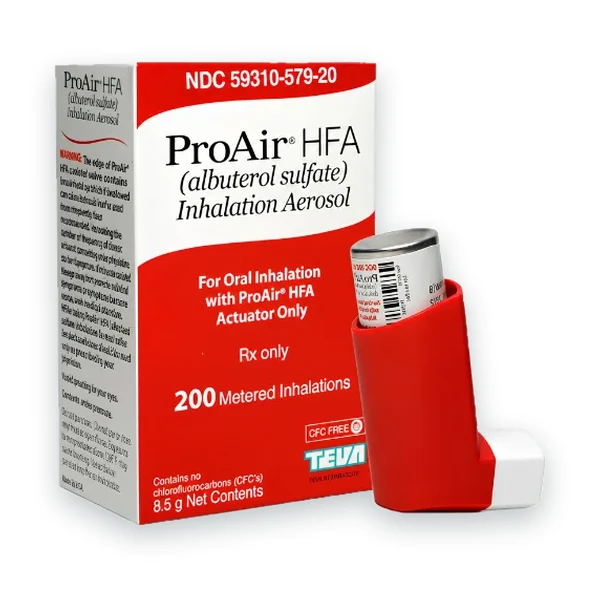



ProAir HFA

AlbuterolAsthma Relief Inhaler

  • In stock
  • Including FREE discreet Delivery
Select Dosage
Select Quantity
Price:

Price preview only. You can choose monthly subscription or one-time order at checkout.

Generic / Compounded alternative available
Branded: $153.99
Alternative: $89.99
Save up to 42%
Choose affordable alternative
Same Ingredients · More affordable · US Licensed Pharmacies

About

What is ProAir® (Albuterol) Inhaler 90 mcg?

ProAir® (albuterol) inhaler 90 mcg is a prescription rescue inhaler used to help open your airways when breathing becomes difficult. It’s commonly prescribed for people with asthma or similar lung conditions and may also be used before exercise to help prevent breathing symptoms. It belongs to a class of medicines called short-acting beta2-agonists (bronchodilators).

  • Used to treat or prevent bronchospasm (tight airways)
  • Can be used before exercise if recommended by your provider
  • Approved for adults and children aged 4 years and older
  • Works by relaxing the muscles around your airways
  • Not a replacement for long-term asthma control medications

How do I use a ProAir® inhaler?

ProAir® inhaler is used by inhaling the medication into your lungs through the mouthpiece. It’s typically used when symptoms occur or before exercise, depending on your provider’s instructions. Always follow the prescribed directions and do not use more often than recommended.

  • Inhale through the mouth using the inhaler device
  • Shake well before use and follow proper inhalation technique
  • Prime the inhaler before first use or after a period of not using it
  • Clean the inhaler regularly to keep it working properly
  • Track doses using the inhaler’s built-in counter

If you need to use your inhaler more often than usual, contact your healthcare provider, as this may mean your asthma is not well controlled.

What are the possible side effects?

ProAir® inhaler can cause side effects, which may vary from person to person. Many are related to how the medication stimulates your body, but some may require medical attention. It’s important to be aware of how you feel after using it.

  • Common effects include headache, dizziness, or throat irritation
  • You may notice a fast heartbeat, shakiness, or nervousness
  • Chest discomfort or palpitations can occur
  • Some people experience cough or upper respiratory symptoms

For detailed information, please refer to the full Important Safety Information.

*Prescription products require an online consultation with a licensed healthcare provider who will determine if treatment is appropriate. Albuterol is the active ingredient in ProAir®. ProAir® is a registered trademark of its respective owner and is mentioned for reference only. Individual results may vary.

How it works

A few simple steps to your medication

1
Online Check
2
Medical Review
3
Fast Delivery

Healthcare. Made simple.

Convenient healthcare, without unnecessary waiting.

Order now

If not eligible: 100% money-back guarantee.

Licensed healthcare providers
24/7 access to care
One-time or subscription, cancel anytime

Topics

  1. 1. Is ProAir® used for asthma symptoms or exercise-related breathing symptoms?
  2. 2. Is ProAir® a rescue inhaler or a daily asthma controller?
  3. 3. Who may be a candidate for ProAir® inhaler?
  4. 4. How should patients think about using ProAir® correctly?
  5. 5. When should a patient contact a healthcare provider urgently?
  6. 6. What health conditions should be discussed before using ProAir®?
  7. 7. What medicines should patients mention before using ProAir®?
  8. 8. How do storage, cleaning, dose tracking, and expiration fit into everyday use?
  9. 9. How does the online prescription process work?

Is ProAir® used for asthma symptoms or exercise-related breathing symptoms?

ProAir® inhaler is used to help manage breathing symptoms when your airways become tight. It’s commonly prescribed for people with asthma or similar conditions and may also be used before exercise if your provider recommends it. The goal is to help you breathe more easily during symptom episodes or prevent them in specific situations.

  • Used for sudden breathing symptoms like wheezing or shortness of breath
  • May be taken before exercise to reduce symptom risk
  • Works on airway tightening rather than long-term inflammation
  • Intended for people diagnosed with reversible airway conditions
  • Should be used according to your provider’s instructions

Is ProAir® a rescue inhaler or a daily asthma controller?

ProAir® inhaler is considered a rescue inhaler. This means it’s used when symptoms happen or are expected, rather than on a fixed daily schedule. It works quickly to help open your airways, but it does not treat the underlying inflammation that often comes with asthma.

  • Used for quick symptom relief when breathing becomes difficult
  • Not designed to replace daily controller medications
  • Often part of a broader asthma treatment plan
  • May be used alongside long-term medications if prescribed
  • Increased use may indicate worsening asthma

If you’re using your inhaler more frequently than expected, your provider may need to review your treatment approach.

Who may be a candidate for ProAir® inhaler?

ProAir® inhaler may be appropriate for individuals who experience breathing symptoms due to asthma or similar airway conditions. It can also be prescribed for those who need support preventing symptoms triggered by exercise. A healthcare provider will assess your symptoms and medical history before prescribing it.

  • Approved for adults and children aged 4 years and older
  • Used for conditions involving reversible airway tightening
  • Requires a medical evaluation before use
  • Not suitable for individuals with known hypersensitivity to albuterol
  • Selection depends on your specific symptoms and health profile

Your provider will determine whether this inhaler fits safely into your overall care plan.

How should patients think about using ProAir® correctly?

Using ProAir® inhaler correctly helps ensure the medication reaches your lungs effectively. It’s important to follow your provider’s instructions and understand the basics of inhaler handling. This includes preparing the inhaler and keeping it clean.

  • Shake the inhaler before use
  • Prime it before first use or after a period of not using it
  • Inhale through the mouthpiece as directed
  • Clean the actuator regularly
  • Use only the inhaler device provided with your medication

When should a patient contact a healthcare provider urgently?

Certain changes in your symptoms or how your inhaler works may require immediate attention. These situations can signal that your condition is not well controlled or that your treatment needs adjustment.

  • Breathing becomes worse after using the inhaler
  • You need to use it more often than usual
  • The inhaler no longer provides expected relief
  • You experience signs of an allergic reaction
  • Symptoms feel more severe or unusual than before

If any of these occur, contact a healthcare provider right away or seek urgent care or CALL 911. For more details, refer to the Important Safety Information.

What health conditions should be discussed before using ProAir®?

Before starting ProAir® inhaler, your provider should be aware of your full medical history. Certain health conditions can affect how your body responds to the medication or require additional monitoring.

  • Heart conditions, including irregular heartbeat or high blood pressure
  • Seizure disorders
  • Thyroid conditions
  • Diabetes
  • Pregnancy or breastfeeding
  • Any history of sensitivity to similar medications

Sharing this information helps your provider determine if this medication is appropriate for you.

What medicines should patients mention before using ProAir®?

Some medications can interact with ProAir® inhaler or affect how it works. It’s important to inform your provider about everything you’re taking, including prescription drugs, over-the-counter products, and supplements.

  • Other inhalers or asthma medications
  • Beta-blockers (often used for heart conditions)
  • Diuretics (water pills)
  • Digoxin
  • Certain antidepressants (MAOIs or tricyclics)
  • Any recent medication changes

Your provider will review your medications to reduce the risk of interactions and ensure safe use.

How do storage, cleaning, dose tracking, and expiration fit into everyday use?

Keeping your inhaler in good condition ensures it works when you need it. Proper storage, regular cleaning, and tracking your usage all play an important role in everyday use.

  • Keep the inhaler clean and dry
  • Clean the actuator regularly to prevent blockage
  • Do not rely on shaking or sound to estimate remaining doses
  • Follow instructions for disposal after labeled number of uses
  • Store according to the label instructions

How does the online prescription process work?

ProAir® inhaler is a prescription medication, so it requires review by a licensed healthcare provider. US Quick Health allows you to complete this process online while maintaining medical oversight.

  • You provide your health information through an online form
  • A licensed provider reviews your case
  • A prescription is issued only if medically appropriate
  • Medication is dispensed through a licensed pharmacy
  • Follow-ups or refills may require additional evaluation

This process helps ensure that the medication is used safely and appropriately.

Important safety information

FAQ

Can I get ProAir® (Albuterol) inhaler 90 mcg online with a prescription?

Yes, but you’ll still need a licensed healthcare provider to approve it. Telemedicine platforms make the process easier, but they don’t skip the medical review. Your health information is evaluated before a prescription is issued.

  • You complete an online questionnaire
  • A provider reviews your symptoms and history
  • A prescription is given only if appropriate
  • Medication is shipped through a licensed pharmacy

If your case needs more evaluation, the provider may recommend another option instead of prescribing ProAir®.

Is ProAir® inhaler the same as albuterol?

ProAir® is a brand name, while albuterol is the active ingredient. Both refer to the same type of medication used to help open the airways when breathing becomes difficult.

  • ProAir® = brand version
  • Albuterol = generic version
  • Both are used for similar breathing symptoms
  • The device or manufacturer may differ

Do I need to use ProAir® inhaler every day?

No, ProAir® inhaler is usually not taken on a fixed daily schedule. It’s typically used when symptoms occur or before exercise if your provider recommends it.

  • Often used “as needed”
  • May be used before exercise
  • Not a replacement for daily controller medications
  • Frequency depends on your condition

What should I do if ProAir® inhaler does not seem to help?

If your inhaler isn’t providing relief like it normally does, don’t ignore it. This could be a sign that your condition is changing or that the inhaler is not being used correctly.

  • Check if the inhaler is empty or blocked
  • Review your inhaler technique
  • Avoid increasing use without guidance

If symptoms continue or worsen, contact your healthcare provider or seek urgent care. For more details, refer to the Important Safety Information.

What should I do if I need ProAir® inhaler more often than usual?

Using your inhaler more frequently than expected can be a warning sign that your asthma is not well controlled. It’s important to address this early instead of relying on more doses.

  • Track how often you’re using it
  • Do not exceed prescribed use
  • Watch for worsening symptoms

Reach out to your healthcare provider as soon as possible.

Can I use ProAir® inhaler before exercise?

Yes, in some cases your provider may recommend using ProAir® before exercise to help prevent breathing symptoms triggered by physical activity.

  • May be used shortly before exercise if prescribed
  • Helps reduce the chance of exercise-related symptoms
  • Not required for everyone

Follow your provider’s instructions.

Can children use ProAir® inhaler?

ProAir® inhaler may be prescribed for children aged 4 years and older, but only under medical supervision. Proper use is important to make sure the medication works as intended.

  • Approved for children 4+ years
  • Requires guidance from a healthcare provider
  • Caregivers may need to assist with use

Can I use ProAir® inhaler with other asthma medicines?

In many cases, ProAir® inhaler is used together with other asthma medications, but this should always be guided by a healthcare provider.

  • Often combined with long-term controller medications
  • Important to share all medications you’re taking
  • Some combinations may need monitoring

Do not adjust or combine treatments on your own. Your provider will make sure your plan is safe and effective.

Can I drink alcohol while using ProAir® inhaler?

The prescribing information does not specifically prohibit alcohol, but alcohol can sometimes affect how your body feels or responds.

  • May increase dizziness or heart-related sensations
  • Effects can vary from person to person
  • Consider how your body reacts

Can I drive after using ProAir® inhaler?

Most people can continue normal activities after using ProAir® inhaler. However, some may experience side effects that could affect focus or coordination.

  • Watch for dizziness or shakiness
  • Avoid driving if you feel unwell
  • Wait until you feel stable before operating machinery

If you notice unusual symptoms after use, give yourself time before driving.

How do I know when my ProAir® inhaler is empty?

ProAir® inhalers typically include a dose counter to help you track how many uses are left. This is the most reliable way to know when it’s time for a replacement.

  • Check the dose counter regularly
  • Plan ahead for refills
  • Do not rely on sound or feel

Using an empty inhaler may not deliver the medication properly, so it’s important to monitor usage.

Other Asthma treatments

Sources

References

ProAir® HFA (Albuterol 90 mcg) - short-acting β2-agonist inhaler (MDI) used for rapid relief and prevention of bronchospasm in asthma and other obstructive airway diseases. / Source: NCBI

Link: https://dailymed.nlm.nih.gov/dailymed/drugInfo.cfm?setid=133fb50a-68d3-4d1b-a47a-67d07cc48da5 / Published: September 2008

Medically reviewed by

H. Igde - MD

Clinical Expertise: Anesthesiology, Emergency Medicine, Urology, and Oncology

Dr. Igde reviewed the medical information on this page for accuracy against current medical knowledge. This is an editorial, non-clinical review: it is not medical advice and does not create a doctor-patient relationship. Whether a treatment is appropriate for you is decided by an independent U.S. licensed provider.

For more information about the scope of the reviewed content and the role of our medical advisors, please visit our Medical Board page.

H. Igde - MD
Last updated on 02/28/2026Next information check will be on 01/29/2027

*All information presented on this page is for informational and educational purposes only and does not constitute medical advice, diagnosis, or treatment. Prescription products are available only after an online consultation with a licensed U.S. healthcare provider who determines if treatment is appropriate. Individual results may vary. US Quick Health LLC does not sell or ship medications directly. All prescriptions are fulfilled by licensed U.S. pharmacies.

ProAir® is a registered trademark of Teva Pharmaceuticals and is mentioned for reference and informational purposes only. US Quick Health LLC is not affiliated with, endorsed by, or sponsored by Teva Pharmaceuticals or any other trademark owners.

Cookie preferences

Choose which cookies this site may use. Your choice is stored on this device and applies to every page. You can come back and change it at any time from the link in the footer.

More detail on what each category collects is in our Privacy Policy.