
What you should know before taking Ethinyl Estradiol & Etonogestrel Vaginal Ring
Review the important warnings, precautions, possible side effects and treatment information before using this product.
Birth Control TreatmentGeneric for: NuvaRing, EluRyng, EnilloRing, Haloette
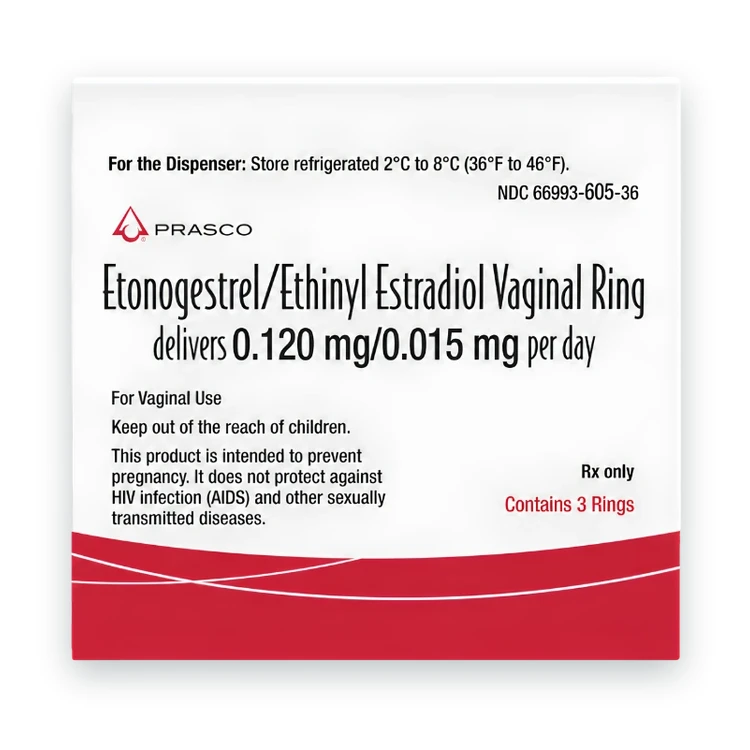
Selected option:0.015 mg / 0.12 mg per 24 hours, 1 Pack with 1 Ring (1 Month)
See important safety information (opens in a new tab)
Images are for illustration purposes only. Actual product, packaging and pack size may differ.
Women over 35 years old who smoke should not use etonogestrel and ethinyl estradiol vaginal ring. Cigarette smoking increases the risk of serious cardiovascular events from combination hormonal contraceptive (CHC) use.
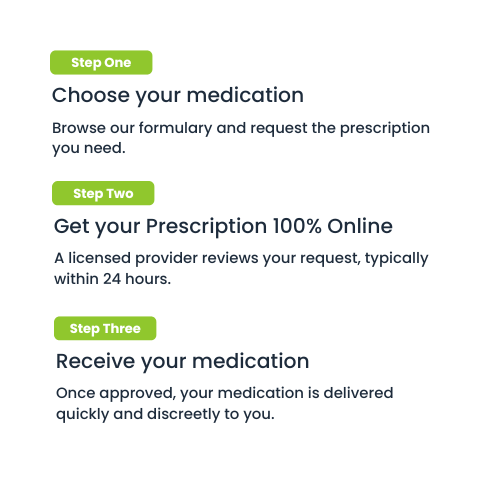
Next: a short medical questionnaire. A licensed provider reviews your answers and decides whether treatment is appropriate for you.
Ethinyl Estradiol & Etonogestrel Vaginal Ring is a prescription birth control ring used to help prevent pregnancy. It is a combined hormonal contraceptive that contains two hormones: etonogestrel, a progestin, and ethinyl estradiol, an estrogen.
A healthcare provider should review your health history before prescribing this type of birth control.
Insert one Ethinyl Estradiol & Etonogestrel Vaginal Ring into your vagina and leave it in place continuously for 3 weeks. After removing it, have a 1-week ring-free period, then insert a new ring on schedule, even if you are still bleeding.
Follow the Patient Information or contact your healthcare provider for situation-specific instructions.
Common side effects can include vaginal irritation or discharge, headache or migraine, nausea, breast tenderness, mood changes, and discomfort related to the ring. Some people may also experience changes in bleeding patterns, abdominal discomfort, acne, or weight changes.
This is not a complete list of side effects or risks.
See Important Safety Information and full Prescribing Information: Here
*Prescription products require an online consultation with a licensed healthcare provider who will determine if treatment is appropriate. Individual results may vary.
A few simple steps to your medication
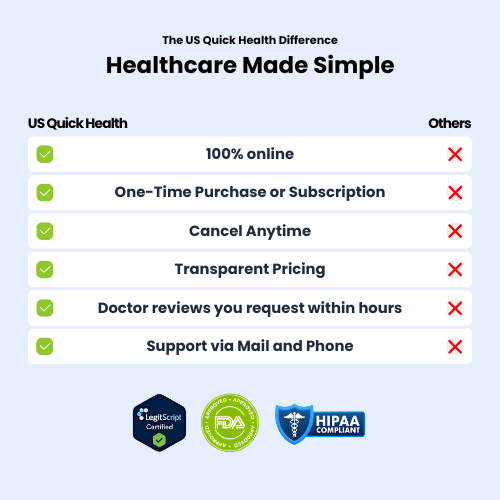
US Quick Health
If not eligible: 100% money-back guarantee.
Review the important warnings, precautions, possible side effects and treatment information before using this product.
Before prescribing Ethinyl Estradiol & Etonogestrel Vaginal Ring, your healthcare provider should review your health history and current medications. Tell them if you smoke, have migraines, high blood pressure, diabetes, liver problems, a history of blood clots or heart problems, breast cancer, or unexplained vaginal bleeding. Also mention if you recently gave birth, are breastfeeding, expect surgery or a long period of limited movement, or take prescription medicines, over-the-counter products, vitamins, or herbal supplements. This helps your provider decide whether this type of combined hormonal birth control is appropriate for you.
Yes. This is a prescription etonogestrel and ethinyl estradiol vaginal ring supplied as a generic combined hormonal contraceptive. It releases approximately 0.12 mg of etonogestrel and 0.015 mg of ethinyl estradiol per day during use. Generic products contain the same active ingredients and are reviewed by the FDA under generic drug requirements. The exact manufacturer or product supplied may depend on the pharmacy filling your prescription, so check your prescription label and package instructions for product-specific information.
What to do depends on how long the ring has been outside your vagina and where you are in your cycle. If it comes out, rinse it with cool to lukewarm water and reinsert it as soon as possible. If it has been out for more than 3 continuous hours, pregnancy protection may be reduced and backup contraception may be needed. Follow the Patient Information for your specific situation.
If the ring-free interval lasts longer than 7 days, insert a new ring as soon as you remember. You may not be fully protected from pregnancy right away, so use a male condom or another appropriate backup method until the new ring has been in place continuously for 7 days. Follow the Patient Information or contact your healthcare provider if you are unsure what to do.
Yes. Some medicines and herbal products can reduce hormone levels and make the vaginal ring less effective. Examples include certain seizure medicines, rifampin or rifabutin, and St. John’s wort. Some interactions may require temporary backup birth control. Tell your healthcare provider about all medicines and supplements you use before starting the ring or whenever something new is prescribed.
The supplied labeling advises breastfeeding patients to use another birth control method until they are no longer breastfeeding. Combined hormonal contraceptives contain estrogen, which may reduce breast milk production, and small amounts of hormones can pass into breast milk. Tell your healthcare provider if you are breastfeeding or recently gave birth so they can help you choose an appropriate contraceptive method and starting time.
Yes. Tampons can be used while the vaginal ring is in place and are not expected to reduce hormone absorption. Be careful when removing a tampon because the ring can sometimes be pulled out accidentally. If that happens, follow the instructions for a ring that has come out and check how long it was outside your vagina.
ETONOGESTREL AND ETHINYL ESTRADIOL VAGINAL RING ring / Source: DailyMed (U.S. National Library of Medicine); Link: https://dailymed.nlm.nih.gov/dailymed/lookup.cfm?setid=1488f5ae-3b34-fcd7-6049-215929b1d324 / Published: June 24, 2024
Medically reviewed by
Clinical Expertise: Anesthesiology, Emergency Medicine, Urology, and Oncology
Dr. Igde reviewed the medical information on this page for accuracy against current medical knowledge. This is an editorial, non-clinical review: it is not medical advice and does not create a doctor-patient relationship. Whether a treatment is appropriate for you is decided by an independent U.S. licensed provider.
For more information about the scope of the reviewed content and the role of our medical advisors, please visit our Medical Board page.

*All information presented on this page is for informational and educational purposes only and does not constitute medical advice, diagnosis, or treatment. Prescription products are available only after an online consultation with a licensed U.S. healthcare provider who determines if treatment is appropriate. Individual results may vary. US Quick Health LLC does not sell or ship medications directly. All prescriptions are fulfilled by licensed U.S. pharmacies.