
What you should know before taking Medroxyprogesterone
Review the important warnings, precautions, possible side effects and treatment information before using this product.
Generic for Depo-ProveraBirth Control Treatment
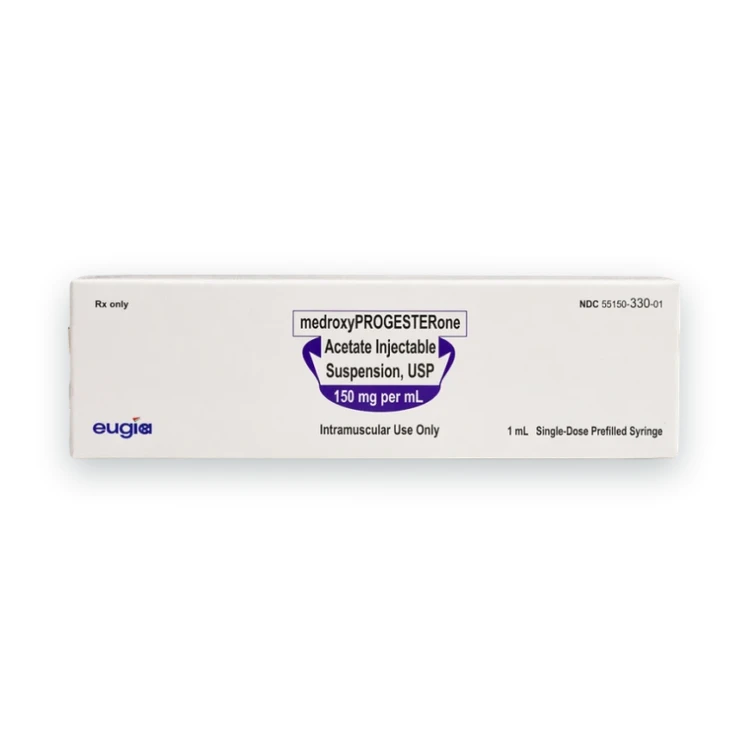
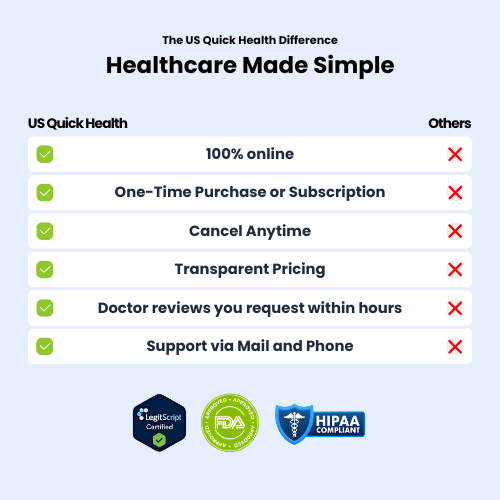
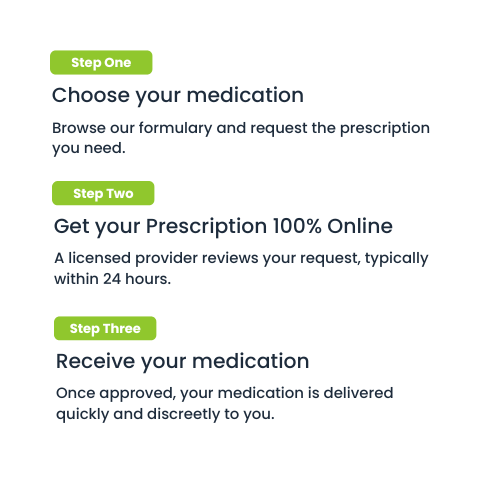
Selected option:150 mg Injection (1 Injection), 1 Prefilled Syringe - 3 Months
See important safety information (opens in a new tab)
Images are for illustration purposes only. Actual product, packaging and pack size may differ.
Women who use medroxyprogesterone acetate injectable suspension may lose significant bone mineral density. Bone loss is greater with increasing duration of use and may not be completely reversible. Medroxyprogesterone acetate injectable suspension is not recommended as a long-term (longer than 2 years) birth control method unless other options are considered inadequate.
Next: a short medical questionnaire. A licensed provider reviews your answers and decides whether treatment is appropriate for you.
Medroxyprogesterone Prefilled Syringe is a prescription birth control injection used to help prevent pregnancy. It contains medroxyprogesterone acetate 150 mg, a progestin hormone, and is a generic for Depo-Provera®.
A healthcare provider will review your health history before treatment to determine whether this birth control method is appropriate for you.
Medroxyprogesterone 150 mg is given as a deep injection into a muscle by a healthcare provider. After the first injection, you generally return for another injection every 3 months, or 13 weeks, to continue pregnancy protection.
Follow your healthcare provider’s instructions and the Patient Information for your individual injection schedule.
Common side effects can include irregular bleeding or spotting, periods that become lighter or stop, weight gain, headache, abdominal discomfort, dizziness, nervousness, and decreased interest in sex. Not everyone experiences the same effects, and this is not a complete list.
See Important Safety Information and full Prescribing Information.
*Prescription products require an online consultation with a licensed healthcare provider who will determine if treatment is appropriate. Individual results may vary.
A few simple steps to your medication
US Quick Health
If not eligible: 100% money-back guarantee.
Review the important warnings, precautions, possible side effects and treatment information before using this product.
Medroxyprogesterone injections can lower bone mineral density, and the amount of bone loss may increase with longer use. Some bone loss may not fully recover after treatment stops. Because of this, use for longer than 2 years is generally not recommended unless other birth control options are considered inadequate. Tell your healthcare provider if you have osteoporosis risk factors, such as a history of bone disease, smoking, heavy alcohol use, an eating disorder, or long-term use of medicines that can weaken bones.
Tell your provider if you may be pregnant or have a history of blood clots, stroke, breast cancer, liver disease, unexplained vaginal bleeding, migraines, seizures, diabetes, depression, or bone-health problems. Also mention if you are breastfeeding and share all prescription medicines, over-the-counter products, vitamins, and herbal supplements you use. Some medicines can affect pregnancy protection. This information helps your provider decide whether Medroxyprogesterone is appropriate for you.
Your repeat injection is normally scheduled every 13 weeks. If more than 13 weeks have passed, contact your healthcare provider before getting another dose. They may need to make sure you are not pregnant before the next injection. Depending on your situation, you may also need backup contraception until your scheduled protection is re-established.
The FDA-approved labeling for this 150 mg intramuscular prefilled syringe describes the injection as being given by a healthcare provider into the upper arm or buttock. It should not be confused with other medroxyprogesterone products that may have different strengths or administration instructions. Follow the instructions provided for the exact product prescribed to you.
Return to fertility can take time after the final Medroxyprogesterone injection. In the study described in the prescribing information, the median time to pregnancy among patients who later became pregnant was about 10 months after the last injection. Some people became pregnant sooner and others later, so this is not a guaranteed timeline. Consider this delay when choosing a birth control method if you may want pregnancy soon.
Medroxyprogesterone can pass into breast milk. The supplied labeling reports that available data did not show harmful effects on milk production, milk quality, or studied infant development. However, the timing of the first injection after childbirth is important. Tell your healthcare provider that you are breastfeeding so they can advise you on when to start based on your situation.
Yes. Certain medicines and herbal products may lower Medroxyprogesterone levels and reduce pregnancy protection. Examples include some seizure medicines, rifampin, and St. John’s wort. Your healthcare provider may recommend backup or another contraceptive method while you use an interacting treatment. Tell them about everything you take rather than stopping or changing another medicine on your own.
MEDROXYPROGESTERONE ACETATE injection, suspension / Source: DailyMed (U.S. National Library of Medicine)
Link: https://dailymed.nlm.nih.gov/dailymed/drugInfo.cfm?setid=01e28bef-9758-40cf-a4ff-86ae9f4f5105 / Published: December 14, 2022
Medically reviewed by
Clinical Expertise: Anesthesiology, Emergency Medicine, Urology, and Oncology
Dr. Igde reviewed the medical information on this page for accuracy against current medical knowledge. This is an editorial, non-clinical review: it is not medical advice and does not create a doctor-patient relationship. Whether a treatment is appropriate for you is decided by an independent U.S. licensed provider.
For more information about the scope of the reviewed content and the role of our medical advisors, please visit our Medical Board page.

*All information presented on this page is for informational and educational purposes only and does not constitute medical advice, diagnosis, or treatment. Prescription products are available only after an online consultation with a licensed U.S. healthcare provider who determines if treatment is appropriate. Individual results may vary. US Quick Health LLC does not sell or ship medications directly. All prescriptions are fulfilled by licensed U.S. pharmacies.